Reading the Ledger: How On-Chain Data Is Replacing Speculation with Structural Market Intelligence
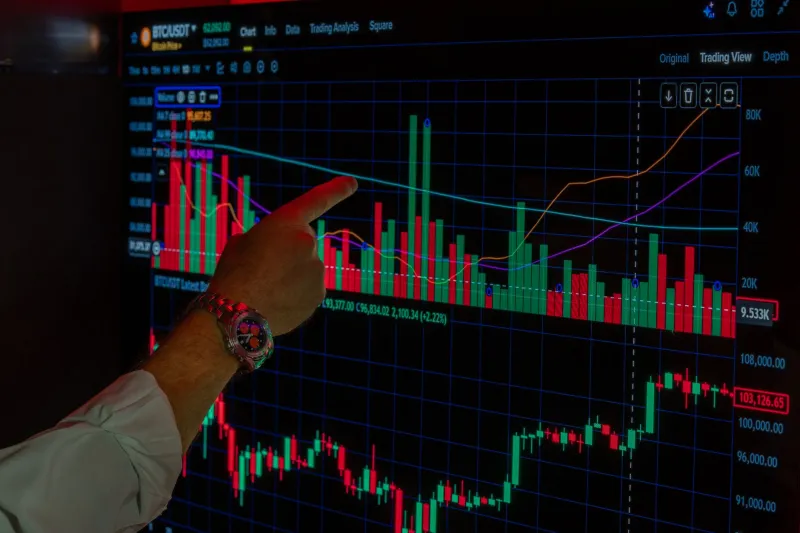
For most of its history, cryptocurrency market analysis has borrowed its vocabulary from traditional technical analysis. Support levels, resistance zones, moving average crossovers, relative strength indicators—the toolkit was adapted wholesale from equity and commodity markets, applied to assets with fundamentally different structural characteristics, and treated as broadly sufficient for informed decision-making.
The results of that approach have been predictably inconsistent. Price action in digital asset markets is subject to manipulation, thin liquidity, and sentiment swings that make traditional technical signals unreliable in ways that practitioners in more mature markets rarely encounter. The question that a growing number of sophisticated participants have been asking is whether there is a more durable source of market intelligence available—one that is native to blockchain architecture rather than imported from a different asset class entirely.
The answer, increasingly, is yes. And it lives in the public ledger.
What On-Chain Analysis Actually Measures
Every major blockchain is, at its core, a continuously updated database of economic behavior. Every wallet balance, every transaction, every smart contract interaction is recorded permanently and made publicly accessible. That transparency was designed primarily as a mechanism for decentralized trust—eliminating the need for a central authority to validate transactions. As a byproduct, it produces an extraordinarily detailed real-time record of how participants in the network are actually behaving.
On-chain analysis is the discipline of extracting structured intelligence from that behavioral record. It is distinct from price analysis in a fundamental way: price is a summary statistic that reflects the outcome of market interactions, while on-chain data captures the inputs—the movements, accumulations, and distributions that precede price discovery.
The distinction matters because behavioral patterns that precede significant price movements are often visible in on-chain data before they become apparent in price action. A large holder quietly distributing coins to multiple wallets over several weeks, for example, may not register in price data until the distribution is complete and selling pressure intensifies. On-chain observers monitoring wallet flows can identify the pattern earlier.
Whale Wallet Behavior: The Accumulation and Distribution Signal
The term "whale" refers to wallets holding sufficiently large positions that their behavior has market impact. Tracking wallet cohorts by holding size is one of the foundational applications of on-chain analysis, and the behavioral patterns of large holders have demonstrated measurable predictive value across multiple market cycles.
Accumulation by large wallet cohorts—identified by sustained inflows to addresses with no corresponding outflow history—has historically correlated with periods that precede price appreciation. The logic is structural: large holders acquiring positions in size are absorbing available supply, tightening the float that smaller participants trade against. When that supply compression coincides with stable or growing demand, upward price pressure follows.
Distribution patterns tell the inverse story. When addresses in the upper holding cohorts begin moving assets to exchange deposit wallets—a behavior that on-chain analytics platforms can identify through address clustering and known exchange wallet tagging—it signals potential selling activity before that selling reaches the order book. Institutional and sophisticated retail participants who monitor these flows can position defensively before the selling pressure becomes visible in price data.
Critically, this signal is not deterministic. Whale behavior is one input among many, and large holders move assets for reasons that do not always involve immediate market sales—collateral posting, custodial transfers, and OTC arrangements all generate on-chain movement without corresponding open-market selling. Contextual interpretation is essential.
Exchange Reserve Trends: The Supply Shock Indicator
One of the most closely watched on-chain metrics across institutional research desks is the aggregate balance of assets held in known exchange wallets. When the total supply held on exchanges declines over a sustained period, it indicates that holders are withdrawing assets to self-custody—a behavior typically associated with long-term holding intent rather than near-term selling.
This dynamic creates what analysts describe as a supply shock condition. If exchange-held supply is declining while demand remains constant or grows, the available liquid supply for market participants to purchase contracts. Historically, sustained exchange outflow trends have preceded periods of price appreciation in Bitcoin and other major assets with sufficient on-chain data history to analyze.
The inverse condition—sustained inflows to exchange wallets—indicates that holders are positioning assets for potential sale, increasing available liquid supply and creating conditions more conducive to price softness.
For US-based institutional participants evaluating position sizing and entry timing, exchange reserve trends have become a standard component of the analytical toolkit. Several major digital asset research firms now publish weekly exchange flow reports as a primary product offering, reflecting the degree to which institutional demand for this data has formalized.
Validator Participation and Network Health Signals
Beyond asset flow analysis, the operational metrics of blockchain networks themselves carry market intelligence. In proof-of-stake networks, validator participation rates, staking ratios, and exit queue activity provide a view into how participants with the deepest network commitment are assessing conditions.
Rising staking ratios—the percentage of total supply locked in validation—reduce circulating supply and signal that a significant cohort of holders have committed capital to the network on a medium-term basis. Conversely, elevated validator exit queues, where operators are signaling intent to unstake, can indicate changing sentiment among technically sophisticated network participants who have weighed the opportunity cost of continued commitment.
These signals are particularly relevant for Ethereum, where the staking ecosystem is large enough that changes in validator behavior carry meaningful market implications. Analysts tracking validator entry and exit queue depth alongside exchange reserve trends can construct a composite view of supply dynamics that price charts alone cannot provide.
The Institutional Adoption of On-Chain Intelligence
What began as a practice among technically oriented individual analysts has migrated steadily toward institutional adoption. Major digital asset managers, hedge funds with cryptocurrency exposure, and an increasing number of traditional financial institutions with crypto research functions now incorporate on-chain metrics into their standard analytical frameworks.
This migration is not incidental. Institutional investors are accustomed to seeking informational edges through data sources that are not universally accessed or understood. On-chain data is public—but interpreting it accurately requires infrastructure, methodology, and contextual expertise that is not uniformly distributed. For the period during which that interpretive expertise remains concentrated among a subset of market participants, the edge it provides is real.
The maturation of specialized analytics platforms has accelerated institutional access. Firms like Glassnode, Nansen, and Arkham Intelligence have built structured data products that translate raw blockchain data into interpretable metrics, reducing the technical barrier to entry for organizations that lack in-house blockchain data engineering capabilities.
Building an On-Chain Reading Practice
For individual investors seeking to incorporate on-chain analysis into their decision-making process, the entry point does not require institutional-grade tooling. Several metrics are available through free or low-cost platforms and provide meaningful signal without requiring advanced technical knowledge.
Exchange net flow—the difference between assets entering and leaving exchange wallets over a given period—is available on most major analytics platforms and provides an accessible window into aggregate supply dynamics. Long-term holder supply metrics, which distinguish between coins that have not moved in over a year and those in active circulation, offer context on the conviction level of the broader holder base. Funding rates on perpetual futures contracts, while derived from trading rather than pure on-chain data, complement on-chain analysis by revealing the degree of leveraged speculation in the market.
The key discipline is treating these metrics as inputs to a broader analytical framework rather than standalone trading signals. On-chain data is most valuable when it corroborates or contradicts other forms of analysis—when multiple independent signals converge, the resulting picture is considerably more reliable than any single indicator.
Conclusion: Transparency as Competitive Advantage
Blockchain's foundational promise was trustless transparency—a public record that no single party controls or can alter. The market intelligence applications of that transparency were not the primary design objective. They are, however, one of its most consequential practical outcomes.
For investors willing to develop fluency in reading the ledger, the blockchain's immutable record of economic behavior represents a genuinely differentiated analytical resource. In a market environment characterized by information asymmetry and narrative-driven price action, the ability to distinguish structural market behavior from surface-level noise is not a marginal advantage. It is, increasingly, the defining characteristic of participants who navigate digital asset markets with durable success.