Under the IRS Microscope: A Practical Breakdown of What US Crypto Holders Must Do Before the 2025 Filing Deadline
For most of the past decade, cryptocurrency taxation in the United States occupied an uncomfortable middle ground: the rules technically existed, enforcement was inconsistent, and a significant portion of American crypto holders operated under the implicit assumption that the complexity of blockchain data made meaningful IRS scrutiny unlikely. That assumption is no longer defensible.
The agency has quietly assembled one of the most sophisticated financial surveillance capabilities in its history, combining mandatory broker reporting, third-party blockchain analytics contracts, and updated guidance that closes loopholes that once made DeFi participation largely invisible to traditional audit triggers. What follows is a practical, non-theoretical breakdown of what American digital asset holders need to know and do before the 2025 filing season.
The Broker Reporting Transformation
The most consequential regulatory development of the current filing cycle is the implementation of expanded broker reporting requirements under the Infrastructure Investment and Jobs Act, the provisions of which began taking effect in stages through 2024 and into 2025. Centralized exchanges operating in the United States—including Coinbase, Kraken, Gemini, and their peers—are now required to issue Form 1099-DA to both the IRS and to account holders for covered transactions.
This is not a minor administrative update. Prior to this requirement, the IRS received aggregate transaction data from exchanges through John Doe summonses and voluntary disclosure programs. The new framework places cryptocurrency exchanges in the same reporting infrastructure as traditional securities brokers, meaning the agency receives individual transaction-level data automatically, without needing to initiate a separate legal process.
For holders who have been inconsistently reporting exchange-based activity, the practical implication is direct: the IRS now possesses the same information you do about your trading history. Discrepancies between your filed return and the 1099-DA issued by your exchange will generate automated matching flags. These flags do not require human review to initiate a correspondence audit—they are processed algorithmically.
DeFi Yield: The Classification Problem That Hasn't Gone Away
Despite regulatory pressure to establish clearer standards, the taxation of decentralized finance activity remains one of the most genuinely contested areas of US crypto tax law. The IRS has maintained its position, articulated in Revenue Ruling 2023-14, that staking rewards constitute gross income in the year they are received, valued at fair market value at the time of receipt.
This creates a practical documentation burden that many retail DeFi participants underestimate. If you provided liquidity to a protocol like Uniswap or Aave throughout 2024 and received yield in the form of governance tokens or protocol-native assets, each distribution event is potentially a taxable income event. The cost basis of those received tokens is their fair market value at receipt—which then becomes the starting point for capital gains calculations when those tokens are subsequently sold or swapped.
For holders with hundreds or thousands of such micro-distributions across multiple protocols, manual reconstruction of this data is not realistic. Tax software platforms with DeFi-specific integrations—including Koinly, CoinTracker, and TaxBit—have materially improved their protocol coverage over the past 18 months, but no platform achieves complete accuracy across all chains and all protocols. Human review of automated outputs remains necessary for anyone with complex DeFi activity.
What the IRS Can Actually See: Blockchain Analytics in Practice
The IRS Criminal Investigation division has maintained contracts with blockchain analytics firms including Chainalysis and TRM Labs for several years. These relationships have expanded significantly, and the analytical capabilities available to the agency now extend well beyond simple exchange-address correlation.
Modern blockchain forensics can probabilistically cluster wallet addresses belonging to the same controller, trace assets across multiple hops through mixing or bridging services, and identify wallet activity that is inconsistent with reported income levels. The last capability is particularly relevant: if your on-chain activity reflects holdings or transaction volumes that are structurally inconsistent with your reported adjusted gross income, that inconsistency can serve as an independent audit trigger.
This does not mean that privacy-preserving behavior is inherently suspicious or that the IRS has unlimited investigative resources. It does mean that the historical assumption—that unhosted wallets and DeFi activity were effectively invisible—should be retired from your compliance planning.
The Practical Checklist: What to Do Now
Rather than cataloguing abstract risks, the following represents a concrete action sequence for US crypto holders preparing for the 2025 filing period.
Collect all 1099-DAs from centralized exchanges. Do not assume the forms will arrive automatically or that your exchange's records will match your own. Download your complete transaction history from every platform you used during tax year 2024 and reconcile it against any 1099-DA received.
Reconstruct your cost basis for every asset. The IRS requires you to track the acquisition date and acquisition cost of every unit of cryptocurrency you hold or have sold. FIFO (first in, first out) remains the default method if you have not elected an alternative. If you have been using specific identification, ensure your records are sufficient to defend that election.
Document all DeFi activity with timestamps and fair market values. For each yield distribution, liquidity provision event, or protocol interaction that generated tokens, you need a record of the date, the asset received, and its USD value at the moment of receipt. On-chain data is immutable, but your interpretation of that data needs to be documented in a form your tax preparer can work with.
Account for NFT transactions. Sales of non-fungible tokens are taxable events. NFTs held for longer than one year qualify for long-term capital gains treatment; those held for less than one year are taxed as ordinary income. The wash sale rule does not currently apply to crypto assets, but legislative proposals to extend it have resurfaced and may affect future tax years.
Disclose foreign exchange holdings if applicable. If you maintained accounts on non-US exchanges with aggregate balances exceeding $10,000 at any point during the year, FBAR filing requirements under FinCEN may apply in addition to standard income tax reporting.
Common Errors That Trigger Correspondence Audits
Based on publicly available IRS guidance and practitioner experience, the following errors are the most frequently cited triggers for crypto-related audit correspondence.
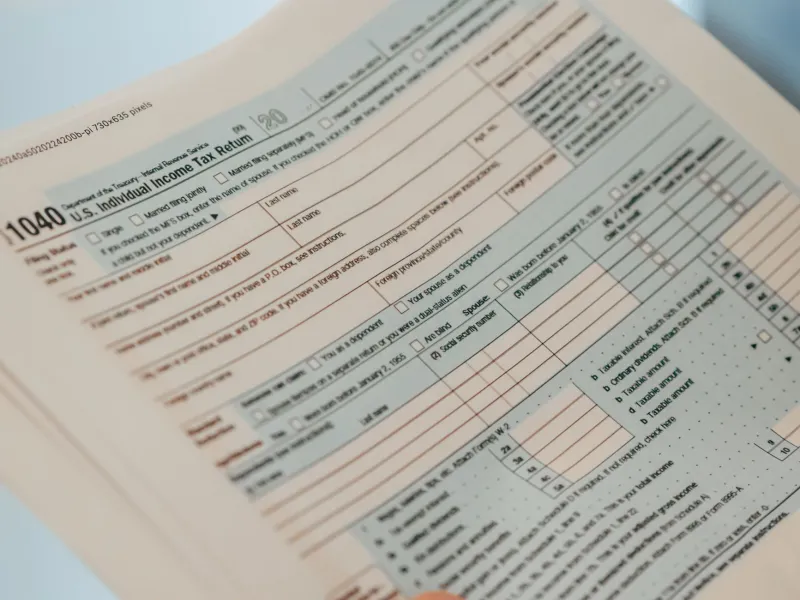
Failing to report exchange-to-exchange transfers as potentially taxable events when an asset was disposed of during the transfer process. Not reporting staking or lending income because it was reinvested rather than withdrawn to fiat. Claiming a loss on a crypto asset and repurchasing it within 30 days without understanding that the wash sale rule, while not currently applicable to crypto, may be relevant if the asset is treated as a security in future guidance. And simply leaving the virtual currency question on Form 1040 unanswered or answered incorrectly.
The IRS has made clear through its enforcement actions and guidance publications that cryptocurrency compliance is a priority area. The combination of expanded broker reporting and blockchain analytics capability means the agency's information advantage over non-compliant filers is now substantial. For American crypto holders, the most effective risk management strategy is straightforward: accurate, complete, and timely reporting.